Wednesday, June 11, 2025

Music In, 2025, Q1

Following the last Music In post, I'm starting this post January 22, and will maintain it as the quarter progresses.

This was going on pretty smoothly, then for reasons unknown to me, on Friday, March 28, 5 albums I had pre-ordered were released on BandCamp. So some heavy eating at the end of the quarter. I had hoped to release this late April, but, given these late additions, that will probably be pushed back at least a month.

Plus, the 90 track, 5h36m LA fire fundraising album has finally been digested! Such a big beast to have to eat!

  1. Franz Ferdinand, "The Human Fear", 2025, 11 tracks, BandCamp. Wow, been awhile since we heard from these guys! "take me home" came out in January, 2004! They seem to have traversed the 2 decades with their sound & energy pretty intact. I have their 2004, 2005, 2013, & 2018 albums, I appear to have missed "Tonight: Franz Ferdinand" in 2009.

    LOL, energetic music like this lately seems to walk a tightrope with me - energetic good, but, not too energetic, too brash.

    But, these tunes are CATCHY! After only a few listens, they are popping up on My Hit Parade, the music that is always playing in my head. Impressive!

    Most of their other albums are 3 stars, this is definitely 4 stars. Still, shows how much I have inflated from 3 to 4 stars over the last decade or 2. Here's "Audacious".

  2. Nenei, "New Sensations, 2022, 11 tracks. This came from my list, I think suggested by my oldest daughter. Nenei is Brazilian, and is giving a bossa nova twist to some pop tunes. Some guest artists. Not that good a voice IMO. She does "what a difference a day makes" which I do. 3 stars.

  3. Fu-Schnickens, "F.U. "Don't Take It Personal"", 1992, 10 tracks. Recommended by Cory Doctorow in his Pluralistic blog. This seems like peak rap. The diction skills of their main rapper are incredible, really fast & clean. I tire of listening to it quickly if I play it as an album. But individual tunes in shuffle play are not bad. 3 stars.

  4. The Weather Station, "Humanhood", 2025, 13 tracks, BandCamp. This is the 7th album by the Toronto band which is the brainchild of vocalist/guitarist Tamara Lindeman. I was going to go 3 stars, but the title track has a flute in it, so, 4 stars!!!

  5. Bonnie "Prince" Billy, "The Purple Bird", 2025, 12 tracks, BandCamp. The latest from a favorite son of Louisville. He had a couple of albums that were kind of downers. In this one, he hits his stride again. Great tunes, on a variety of topics. 4 stars. Here's a nice oom-pah song, "guns are for cowards".

  6. Victoria Port, "Did It Again", 2025, 4 tracks, BandCamp. London-based neo-motown. Very easy to listen to. Here's "Cigarette".

  7. Various Artists, "Good Music to Lift Los Angeles", 2025, 90 tracks, BandCamp. A benefit album, I think they wanted $30, I gave them $60 - I broke my $1/track rule.

    Wow, this thing is just so huge! 90 tracks! What, 10-15 albums? 5 hrs & 36 minutes! & consistently high quality. I was going to recommend it to my daughter & others, but, it was a 1 day only deal?!?!? I'm glad I got it, but, why don't they want me to share it, & other people to buy it ?!?!?

    Here are the artists I recognized:

    1. R.E.M. Doing "Electrolyte", 1 of their big hits?
    2. Death Cab for Cutie and The Postal Service
    3. Neko Case
    4. TV On The Radio
    5. Jeff Tweedy
    6. The War on Drugs
    7. Tenacious D. Jack Black's band, yes? Their cover of "Keep On Lovin' You" was the 1st 1 I dropped from my "current listening" playlist.
    8. Modest Mouse
    9. Little Dragon
    10. My Morning Jacket. Their cover of "Together Again", a country standard, was meh.
    11. Jason Isbell and the 400 Unit
    12. Soccer Mommy
    13. Animal Collective
    14. Lucius
    15. Interpol
    16. Dirty Projectors
    17. The New Pornographers
    18. Soul Asylum
    19. Cunningham Bird

    So, 19 out of 90! Still have this in the "burning in" rotation. It's just so much! The quality is overall so good.

    Here are the covers I recognized:

    1. "Fade Into You", Perfume Genius.
    2. "Being for the Benefit of Mr. Kite", K. Flay.
    3. "Keep On Lovin' You", Tenacious D.
    4. "Together Again", My Morning Jacket.
    5. "The One I Love", Jason Isbell & the 400 Unit.
    6. "Woodstock", Chelsea Wolfe.
    7. "Porcelain", Porches. I've always loved this Chili Pepper's song, it's in my book.
    8. "My Best Friend's Girl", Centro-matic feat. Jason Isbell and Sadler Vaden.
    9. "Enjoy the Silence", Death Cab for Cutie and The Postal Service.

    Here are the bands whose content stuck out enough for me to buy an album:

    1. Hippo Campus, "Flood". Emo indy rock.
    2. The Dip, "Love Direction". Very funky, dance music.
    3. Shannon Lay, "All this life goin down", 2017, 10 tracks. Out of CA. Ethereal chick pop, I bought her 1st of 4-5 albums, which was not recorded in her basement.
    4. Faye Webster, "Faye Webster", also 2017, 10 tracks. Out of Atlanta. I bought her 1st album out of 4-5.
    5. Local Natives, "Violet Street", 2019, 10 tracks. Out of LA, this was their 4th album. I was going to start with their 1st (2010), but it didn't seem to be on BandCamp.

  8. Shotgun Jazz Band, "Algiers Strut", 2011, 13 tracks, BandCamp. I think I liked a track of their stuff & wound up going to BandCamp & buying their whole catalog - 6 albums, 1 single, 2011-present - for $66.78. Not sure what I was thinking. I decided to download the albums in chronological order, maybe 1/month or so. This 1 is the oldest.

    Ugh, the engineering on the 1st album is horrible. The vocalist sounds like she is in another room. At times the horns drown her out completely. I listened to it a few times to see if my ear would acclimate, but it remains totally annoying, straining to make out the vocals. I asked Bandcamp for a full refund, for all the albums. They did so immediately, yay! Nice work, BandCamp!

  9. Hippo Campus, "Flood", 2024, 13 tracks, BandCamp. I've listened to the "Good Music to Lift LA" maybe 5 x now. 90 tracks is a lot! This is the 1st band whose tune made me want to buy an album. Nice indie rock, reminiscent of Grizzly Bear or Ra Ra Riot. 4 stars. Here's "Corduroy".

  10. katie dey, "anomalies", 2025, 11 tracks, BandCamp. 2 stars for "O Holy Night". katie has been really prolific & generally enjoyable, this is starting to sound too much like modern pop to me. 4 chords, I-IV-vi-V. 3 stars.

  11. Jason Isbell, "Foxes in the Snow", 2025, 11 tracks, BandCamp. Isbell's breakup album, from his wife, fiddler & vocalist & 400 unit member Amanda Shires. They had a daughter together. Appropriate that he does this a a solo album, just him & an acoustic guitar.

    I think this song, "True Believer", is the essence of this breakup album. The chorus starts:

    All your girlfriends say I broke your fucking heart, and I don't like it.

    A nice collection of great tunes, 4 stars.

  12. Snowgoose, "Descendant", 2024, 11 tracks, BandCamp. From Glasgow. Very poppy. I think I saw something about Belle & Sebastian tie-ins? 4 stars. Here's the 1st track, "Better Listen".

  13. Taidi Tatham, "Miles Away", 2025, 20 tracks, BandCamp. Like all of Taidi's stuff, this is very listenable. Almost makes me want to quit bad-mouthing jazz. But, after several listens to this album, nothing is really standing out. So, 3 stars.

  14. Omar, "Research & Brighter The Days", 2025, 5 tracks, BandCamp. I love Omar. He reminds me of Stevie Wonder and Al Green. Great beats. 4 stars. Here's "Brighter The Days".

  15. Unknown Mortal Orchestra, "IC-02 Bogotá", 2025, 8 tracks, BandCamp. This is very unlike their earlier albums. No vocals. Kind of reminded me of the David Byrne/Brian Eno album that was all sound effects. 3 stars

  16. Destroyer, "Dan's Boogie", 2025, 9 tracks, BandCamp. Well, after several albums, I think I finally am tired of Dan's voice. Plus, the songs sound really similar to his earlier stuff. 3 stars.

  17. Criibaby, "in the garden", 2025, 7 tracks, BandCamp. Oh, clever, I just noticed all the songs have "(in the garden)" appended to their titles. Most of the tracks have guest artists. This is the last one for Q1, I had been noticing that it was a lot of instrumentals. I just finished listening to it again - only the last track has vocals. These are nice tunes, very chill, very ethereal. But I would have liked more vocals. 3 stars.

Phew, what a slog! Here is it mid-June. Well, I can finally move on to the Q2 music. So far only 11 albums, hopefully they're won't be a deluge at the end like last quarter. It would be nice to not be processing new music all the time, to go back & listen, but, in terms of getting to be an older and older man, I don't think I should stop.

Tuesday, June 10, 2025

The Devils

"The Devils", by Joe Abercrombie, 2025, 576 pages, 224k words.

I enjoyed his Shattered Seas trilogy, wow, all the way back in 2018, blogged here. He's a Brit & a gritty writer.

I thought this was mentioned as the 1st of a trilogy, but I can't find anything to confirm that. So maybe it's standalone.

This is basically a Suicide Squad kind of setup: convicted miscreants are the pope's Mission Impossible team. They are led by a cleric, and include a werewolf, a vampire, an immortal warrior, a magician, a fixer, and an elf. Sounds like D&D. Their mission is to place the young thief who is the long lost Empress of Troy back on the throne.

It's a very nice alternate history. Jebus was a woman & was broken on the wheel rather than crucified, so their holy symbol is the circle rather than the cross. The pope & most of the church officials are women. Troy won the Trojan War & still is the major power of eastern Europe. Carthage defeated Rome? And the crusades were fought against invading elves rather than Moslems.

It's definitely a page turner, a lot of fun.

Wednesday, June 04, 2025

Bullshit Machines

Thanks to Doc Searls for this post, which includes links to 2 articles on AI-based bullshit!
  1. In the Financial Times, "Generative AI models are skilled in the art of bullshit". This may be paywalled.

    It opens with Harry Frankfurt and "On Bullshit", for which I just published a review/summary.

    Here's a nice picture of Harry:

  2. "Modern Day Oracles or Bullshit Machines".
    Yet for all the good that AI systems will do, they will also saturate our information environment with bullshit at a scale we’ve never before encountered.
    An online course, 18 5-10 minute lessons. Looks very impressive & comprehensive. Puts my efforts to shame :-( But, it figures, as the 2 authors are college professors, rather than a retired dumbass.


Here's the home page/directory for my posts on Bullshit.

Tuesday, June 03, 2025

Scientist AI, FTW?

This blog post by Robin Sloan:
Only oracular

links to and comments on this very interesting research paper from Cornell:

Superintelligent Agents Pose Catastrophic Risks: Can Scientist AI Offer a Safer Path?

I haven't read the Cornell paper yet, up soonest. I wanted to capture this, regardless. That's what a blog used to be, yes? A weblog where you record interesting things you found on the web.


Here's the home page/directory for my posts on Bullshit

Saturday, May 31, 2025

4 Quickies

As the writing of my review/summary of "On Bullshit" drug out to over a month, I imposed a "no new novels until you're finished" edict. But, there were a few x where i wasn't going to work on the review/summary & didn't want to do music or doomscroll, when I went on and read a short story. All of these were by 3 of my favorite authors, I think purchased for $0.99 or $1.99. They had maybe been online originals at Tor.com? So these aren't a real reading $$$ value, but I am happy to support these authors.

  1. "Human Resources", by Adrian Tchaikovsky, 2025, 32 pages, 4k words. A somewhat Kafkaesque tale of the coming AI revolution in an "Office Space" environment. It ends with some very heavy-handed humor.

  2. "The Tale of the Wicked", by John Scalzi, 2023, 25 pages, 7k words. I think I had read this before. Again, AI leads to unexpected results in interstellar fleets.

  3. "Vigilant", by Cory Doctorow, 2024, 29 pages, 9k words. Doctorow has created his own genre: exposes and takedowns of crap software systems. One of his novels recently did prison systems software which rips off prisoners for visits, books, you name it. This short story is about remote student surveillance software. Kobo says it is in the "Little Brother" series.

  4. "The Canadian Miracle", by Cory Doctorow, 2023, 23 pages, 5k words. Set in the world of "The Lost Cause", where some more progressive countries have made progress against the climate crisis, while others more under the thumb of Big Oil are facing more of a struggle. Canadian "blue helmets" trying to help out in Mississippi run afoul of MAGAts.

Thursday, May 29, 2025

On Bullshit

"On Bullshit", by Harry Frankfurt (1929-2023), was originally published as an essay in 1986 in the Raritan Quarterly Review, then republished as a book in 2005.

It is only 20 pages, < 8k words - $9.99 on Kobo, expensive! Here's a link to a PDF at some university. If it goes away, I'm sure DuckDuckGo can find you another one.

I had assumed that the book would be an expansion on the essay, but I read a review that said, no, the book was the essay, word for word.

This book is very short. I recently read it again. I have thought up 2 possible 1 line reviews:

  1. "'On Bullshit', by philosophy professor Harry Frankfurt, is bullshit."

  2. "In 'On Bullshit', philosophy professor Harry Frankfort bullshits about bullshit and bullshitting."

And, I'm really not just being snarky here. He starts out so noncommital, so wishy-washy, I couldn't help but wonder, is he writing this tongue-in-cheek? Or, bullshitting about bullshitting, is he as big a fan of self-reference as I am?

Let's take his 1st utterance re bullshit:

we have no clear understanding of what bullshit is, why there is so much of it, or what functions it serves.
I would say that everyone could immediately start answering those 3 questions, including Frankfurt, and that is what he says he's going to do.

This next particularly threw me:

I have not undertaken a survey of the literature, partly because I do not know how to go about it.
??? I mean, when the essay came out, Frankfurt was a 57 YO college professor. I thought when a college professor came up with an idea for a new avenue of exploration, they called in 1-2 of their grad students and said "Hey, check out {$blah}, see what you can find out." No?

But he immediately contradicts himself and moves to another short essay, "The Prevalance of Humbug", by Max Black (1909-1988), 1980, and starts heavily excerpting it. Here's a link to that essay. It is longer than this one, but still only 10k words. I guess I will write a review of it next? Black was also a philosopher.

Frankfurt explains that humbug is the polite and less intense version of bullshit.

Black suggests a number of synonyms for humbug, including the following: balderdash, claptrap, hokum, drivel, buncombe, imposture, and quackery. This list of quaint equivalents is not very helpful. But Black also confronts the problem of establishing the nature of humbug more directly, and he offers the following formal definition:
HUMBUG: deceptive misrepresentation, short of lying, especially by pretentious word or deed, of somebody’s own thoughts, feelings, or attitudes.
Hmmm, in the list of synonyms, I looked up "buncombe" - it is probably more commonly "bunk", and probably also the root of "bunco" as in "bunco squad".

Frankfurt now takes Black's definition & goes over it point by point. [This reminded me of the discussion of the elements of a Basic Good in "How Much Is Enough? Money and the Good Life", the 1st serious book I reviewed/summarized in 2012. 1 of the authors of that book was a philosopher, so I guess this is a philosopher thing ...]

  • Deceptive misrepresentation. Frankfurt describes this further as "deliberate" misrepresentation. Then there's some philosophical discussion of how heavily the intent, the state of mind of the speaker, figures in the humbug.

    I really feel this totally misses the essence of bullshit - that it is post-truth.

  • short of lying. "What continuum could this be, along which one encounters humbug only before one encounters lying? Both lying and humbug are modes of misrepresentation." This might be a useful concept.

  • especially by pretentious word or deed. Frankfurt mentions how "'pretentious bullshit' is close to being a stock phrase." But he then makes what I think is a good point:
    I am inclined to think that when bullshit is pretentious, this happens because pretentiousness is its motive rather than a constitutive element of its essence.
  • misrepresentation ... of somebody’s own thoughts, feelings, or attitudes.
    whenever a person deliberately misrepresents anything, he must inevitably be misrepresenting his own state of mind.
    Somehow to me the person's state of mind has nothing to do with it. Maybe because I'm not a philosophy professor?

Frankfurt presents as an example of something that is clearly humbug, a Fourth of July orator, spewing patriotic blather.

It is clear that what makes Fourth of July oration humbug is not fundamentally that the speaker regards his statements as false. Rather, just as Black’s account suggests, the orator intends these statements to convey a certain impression of himself. He is not trying to deceive anyone concerning American history. What he cares about is what people think of him.
I find Black's concept of humbug pretty uncompelling. Oh wait, Frankfurt does too!
I do not believe that it adequately or accurately grasps the essential character of bullshit. It is correct to say of bullshit, as he says of humbug, both that it is short of lying and that those who perpetrate it misrepresent themselves in a certain way. But Black’s account of these two features is significantly off the mark.
So next up, a real heavy hitter: Ludwig Wittgenstein (1889-1951).
Wittgenstein once said that the following bit of verse by Longfellow could serve him as a motto:
In the elder days of art
Builders wrought with greatest care
Each minute and unseen part,
For the Gods are everywhere.
The point of these lines is clear. In the old days, craftsmen did not cut corners. They worked carefully, and they took care with every aspect of their work. Every part of the product was considered, and each was designed and made to be exactly as it should be. These craftsmen did not relax their thoughtful self-discipline even with respect to features of their work that would ordinarily not be visible. Although no one would notice if those features were not quite right, the craftsmen would be bothered by their consciences. So nothing was swept under the rug. Or, one might perhaps also say, there was no bullshit.

It does seem fitting to construe carelessly made, shoddy goods as in some way analogues of bullshit.

...

Is the bullshitter by his very nature a mindless slob? Is his product necessarily messy or unrefined? The word shit does, to be sure, suggest this. Excrement is not designed or crafted at all; it is merely emitted, or dumped. It may have a more or less coherent shape, or it may not, but it is in any case certainly not wrought.

The notion of carefully wrought bullshit involves, then, a certain inner strain.

Again, I find sloppiness as a hallmark of bullshit completely unconvincing. After all, advertising and propaganda are both carefully crafted. Oh wait, Frankfort agrees with me!
The realms of advertising and of public relations, and the nowadays closely related realm of politics, are replete with instances of bullshit so unmitigated that they can serve among the most indusputable and classic paradigms of the concept.
[Hmmm, I am reminded that I read & summarized the 1928 book "Propaganda", by Edward Bernays, the father of PR, in 2018. I need to read my summary.]

Frankfort tells a story about Wittgenstein going off on a friend, Fania Pascal, recovering from a surgery:

I [the friend] croaked: "I feel just like a dog that has been run over." He was disgusted: "You don't know what a dog that has been run over feels like."
Maybe Ludwig was joking with her? The friend was clearly using a "figure of speech", yes? She wasn't lying.
Hers is not just any bad feeling but, according to her account, the distinctive kind of bad feeling that a dog has when it is run over. To the Wittgenstein in Pascal’s story, judging from his response, this is just bullshit.

...

Her fault is not that she fails to get things right, but that she is not even trying.

From this, a strong statement from Frankfort:
Her statement is grounded neither in a belief that it is true nor, as a lie must be, in a belief that it is not true. It is just this lack of connection to a concern with truth — this indifference to how things really are — that I regard as the essence of bullshit.
Hmmm. Maybe.

Frankfort explores the dictionary for more info about bull.

1st, a discussion of bull sessions:

it is understood by everyone in a bull session that the statements people make do not necessarily reveal what they really believe or how they really feel.

...

the usual assumptions about the connection between what people say and what they believe are suspended. The statements made in a bull session differ from bullshit in that there is no pretense that this connection is being sustained.

2nd:
a British usage of bull in which, according to the OED, the term refers to “unnecessary routine tasks or ceremonial; excessive discipline or ‘spit-and-polish’; = red-tape.”
So maybe, anticipating the now common term "bullshit job".

3rd:

The term bull is also employed, in a rather more widespread and familiar usage, as a somewhat less coarse equivalent of bullshit. In an entry for bull as so used, the OED suggests the following as definitive: “trivial, insincere, or untruthful talk or writing; nonsense.”
Frankfort disagrees with "trivial" and "nonsense", I concur.

LOL, again hard to know if Frankfort is bullshitting or not. He discusses "hot air":

No more information is communicated than if the speaker had merely exhaled. There are similarities between hot air and excrement, incidentally, which make hot air seem an especially suitable equivalent for bullshit.
Frankfort moves on to bullshit as a verb:
Now consider these lines from Pound’s Canto LXXIV, which the OED cites in its entry on bullshit as a verb:
Hey Snag wots in the bibl’?
Wot are the books ov the bible?
Name ’em, don’t bullshit ME.

This is a call for the facts.

...

he is calling the bluff. The connection between bullshit and bluff is affirmed explicitly in the definition with which the lines by Pound are associated:

As v. trans. and intr., to talk nonsense (to); … also, to bluff one’s way through (something) by talking nonsense.

It does seem that bullshitting involves a kind of bluff. It is closer to bluffing, surely, than to telling a lie.

We're back to our continuum of modes of misrepresentation:
Lying and bluffing are both modes of misrepresentation or deception.
Another statement re the "essence of bullshit":
For the essence of bullshit is not that it is false but that it is phony. ... What is wrong with a counterfeit is not what it is like, but how it was made. This points to a similar and fundamental aspect of the essential nature of bullshit: although it is produced without concern with the truth, it need not be false.
Frankfort recounts advice a father gives a child in Eric Ambler's 1967 novel Dirty Story:
One of the first things he taught me was, “Never tell a lie when you can bullshit your way through.
Why? Is the following true?
people do tend to be more tolerant of bullshit than of lies, perhaps because we are less inclined to take the former as a personal affront.
Does this support that assertion?
The [father] identifies the alternative to telling a lie as “bullshitting one’s way through.” This involves not merely producing one instance of bullshit; it involves a program of producing bullshit to whatever extent the circumstances require. This is a key, perhaps, to his preference. Telling a lie is an act with a sharp focus.
This leads Frankfort to the well known concept of a bullshit artist.
a person who undertakes to bullshit his way through has much more freedom. His focus is panoramic rather than particular. ... It is more expansive and independent, with more spacious opportunities for improvisation, color, and imaginative play. This is less a matter of craft than of art. Hence the familiar notion of the "bullshit artist".
Is the Orange Turd a bullshit artist, or what? The above describes him very well. His 1 skill besides bullying. Hard to believe that is all it takes to destroy the US hegemony of the last 70 years.

Frankfort now references another heavy hitter:

In his essay “Lying,” Saint Augustine distinguishes lies of eight types, which he classifies according to the characteristic intent or justification with which a lie is told. ... It is only the remaining category that contains what he identifies as “the lie which is told solely for the pleasure of lying and deceiving, that is, the real lie.”
The essay by St. Augustine (354-430) is our longest so far, 19k words. Here's a link to it. It may actually be titled "On Lying". It was written around 395 a.d. I guess it goes in the reading list too.

I don't think Frankfort has much use for St. Augustine's definition of "real lying".

Moving on, he starts to wrap it up:

He [a bullshitter] does not reject the authority of the truth, as the liar does, and oppose himself to it. He pays no attention to it at all. By virtue of this, bullshit is a greater enemy of the truth than lies are.

...

Why is there so much bullshit? Of course it is impossible to be sure that there is relatively more of it nowadays than at other times. There is more communication of all kinds in our time than ever before, but the proportion that is bullshit may not have increased. Without assuming that the incidence of bullshit is actually greater now, I will mention a few considerations that help to account for the fact that it is currently so great.

Bullshit is unavoidable whenever circumstances require someone to talk without knowing what he is talking about. ... Closely related instances arise from the widespread conviction that it is the responsibility of a citizen in a democracy to have opinions about everything, or at least everything that pertains to the conduct of his country’s affairs.

...

The contemporary proliferation of bullshit also has deeper sources, in various forms of skepticism which deny that we can have any reliable access to an objective reality, and which therefore reject the possibility of knowing how things truly are.

That last clearly calls to mind Qanon and "deep state" conspiracy theories.
One response to this loss of confidence has been a retreat from the discipline required by dedication to the ideal of correctness to a quite different sort of discipline, which is imposed by pursuit of an alternative ideal of sincerity. Rather than seeking primarily to arrive at accurate representations of a common world, the individual turns toward trying to provide honest representations of himself.
I'd have to say Frankfort is less that impressed with this approach. LOL, the last 4 words of the book:
sincerity itself is bullshit.

I just don't know! It's all gotten too meta for me! Is he bullshitting us or not, I don't know. I also think that all the discussions here come from earlier, simpler times. The world of post-truth has been developing since, what, WWII? But it has clearly accelerated, nay, warp-shifted with the onset of the Orange Turd bullshitter-in-chief. I think we need a different approach than the philosophical analysis vaguely attempted here.


Here's the home page/directory for my posts on Bullshit.

Friday, May 16, 2025

Detect hallucinations for RAG-based systems

The article "Detect hallucinations for RAG-based systems" was just published in the AWS (Amazon Web Services) blog. I'm sure this article will be as ROFL as their last one on hallucinations - or as I like to call them, ERRONEOUS RESPONSES, or WRONG ANSWERS, or INCORRECT ANSWERS, or FALSE ANSWERS.

I will leave it to the reader to spot all the bullshit in this article.

I do note, they claim: "Hallucinations can be categorized into three types,"

  1. Input-conflicting;
  2. Context-conflicting;
  3. Fact-conflicting.
So many different kinds of wrong. This might need to be incorporated into my WIP "A Taxonomy of Bullshit".


Here's the home page/directory for my posts on Bullshit.

Thursday, May 15, 2025

The Best Science Fiction of the Year Volume 7

"The Best Science Fiction of the Year Volume 7" edited by Neil Clarke, 2023, 800 pages, 248k words, 31 stories: 22 short stories (< 7500 words), 7 novelettes (< 17500 words), 2 novellas (< 40000 words).

This volume covers 2021, but was not released until December 29, 2023??? I guess Clarke was busy?


"Proof by Induction", by José Pablo Iriarte I enjoyed because it was about 2 mathematicians, 1 of them dead, working on 1 of those impossible proofs.


This was followed by "Integral Nothings", by Robert Reed - 2 math references in a row. This is a fun story to read, with sections focusing on people who are "the world's {$blah}est {$something}". Very powerful technology is fixing the world, surely that's a good thing?


"Paley's Watch" by Anil Manon was a fun story, about the discovery of a random alien artifact.


"Vaccine Season" by Hannu Rajaniemi I had already read in the 2021 edition of MIT Technology Review's "Twelve Tomorrows" annual collection, titled "Make Shift", blogged here. Here's what I said about the story then, after complaining about a raft of pandemic stories in the collection:

The last story, "Vaccine Season" by Hannu Rajaniemi, gave an incredibly hopefully future vision. Phew, thanks Hannu, I needed that!
It is a great story, I enjoyed the reread.


"Where There are Cities, These Dissolve Too" by S. Qiouyi Lu is a very visceral story about garbage mining machines repurposed to be human piloted battle bots in the arena. It is also a story of love and betrayal. Kudos to ær for creating ær own pronoun?


"Hānai" by Gregory Norman Bossert is a cute story about the last member of a manatee-like race dancing the hula.


"The Equations of the Dead" by An Owomoyela has a nice, authentic noir feel to it.


"The Trolley Solution" by Shiv Ramdas is a very nice, very thoughtful exploration of the role of "AI" in education.


"Aptitude" by Cooper Shrivastava is interesting & somewhat playful, describing candidates for admission to a universe-building school undergoing their entrance exam.


"The Tide of Moon City" by Regina Kanyu Wang, translated by Xueting Christine Ni, I found sophomoric & completely trite. One wonders if it was the original story or the translation.


"A Rocket for Dimitrios" by Ray Nayler was incredibly fun, an alternative history where the US wins WWII & becomes the world's overlord via alien tech found from the flying saucer crash at Roswell. Can you say, disintegrator rays? Nayler's latest (2nd?) novel is just out, I am really looking forward to it.


"Jaunt" by Ken Liu was a great read. A post-covid story in which telepresence goes wild. MAGAts, of course, don't like it.


"The Water Beneath Our Feet" by Alice Towey was a nice story about a farming cyborg with a big heart.


"Elegba's Valley" by Tade Thompson was an interesting story exploring an attempt to implement Abundance in an African country.


"He Leaps For The Stars, He Leaps For The Stars" by Grace Chan brought to the surface of my thinking something that been trying to break through. The story is about a young man trying to win the solar system talent contest or some such. The candidate performers are bred specifically for this. From the time they can walk, they are taught to be singers, dancers, celebrities. I think the reason I find it hard to engage with most of the modern pop stars is that this is not actually too far from their life stories. They are on Disney shows from the time they are young children, by their late teens-early 20s they are ready for pop stardom. Completely manufactured.


"Complete Exhaustion of the Organism" by Rich Larson is gritty and penetrating as always. But, I'm not sure what the message of this story was, if it had one.


"Bots of the Lost Ark" by Suzanne Palmer is a cute bot story. It was surprising when a human being finally showed up in the story, which had heretofore had lots of interesting and creative bots' goings-ons.


So, 17 out of 31 stories mentioned above, 16 positive, 1 negative. Just over half. I guess I'll start posting that number. I am indeed a geek.

Sunday, May 04, 2025

The Half Life of Empire

This is a must-read article, it makes so much sense:
The Half Life of Empire
Economics from the Top Down
Blair Fix
I have been advocating for a while a peaceful & orderly handoff of the hegemony from the US to China, so we can maybe avoid winding up in the dustbin of history like the UK.

Oops, too late.

The half life - the time during which it comsumed over half of the % of the world’s energy as it did at its peak - of the British Empire was 1850-1952, peaking in 1900.

The half life of the US hegemony was 1889 to 2008, peaking in 1945.

In 2009, China’s energy consumption passed the US. “Within a few years, China will consume double the energy of the United States.

The American century is over. The Chinese century has begun.

I, for one, welcome our new Chinese hegemons.

Tuesday, April 29, 2025

The Orange Turd as an Hallucinating LLM

Kottke links to a very interesting article "The Hallucinating ChatGPT Presidency". I shared (in NewsBlur) Kottke's post, with the comment, "The Orange Turd is indeed the prophet of the coming Bullshit Apocalypse." Here's 2 excerpts from the article:
The key thing is this: These models are designed to give you what you want, not what’s true. They optimize for plausibility rather than accuracy, delivering confident-sounding answers because that’s what humans tend to find satisfying. It’s a bit like having a very articulate friend who’s willing to hold forth on any topic, regardless of whether they actually know anything about it.

...

The key insight isn’t just that Trump makes things up (though he does). It’s that his response generation follows the same fundamental patterns as an LLM: Take an input, process it through a set of fixed parameters (“always claim victory,” “never admit error,” “blame others”), and generate a confident-sounding response with little regard for factual accuracy.

It's a really good, quick read. They take a recent Orange Turd interview & run it through an LLM. The LLM is as full of bullshit as the Orange Turd is, but is actually quite a bit more coherent - duh. The Bullshit Apocalypse approaches ...


Here's the home page/directory for my posts on Bullshit.

Saturday, April 19, 2025

Ymir

"Ymir", by Rich Larson, 2022, 297 pages, 92k words.

This book seemed longer than 92k words? I must be slowing down.

Larson really has stood out in the Clarke's Years Best Sci Fi collections, of which I have read the 1st 6, bringing me up to 2020. This is Larson's 2nd & most recent novel. I guess if I want to read more of his stuff I will have to go back to the Year's Best collections.

Ymir is the frost giant of norse creation myths. In this book, it is an icy planet with lots of yummy minerals. The mining corporation is as nasty as you would imagine. The corporate enslavement technology is chilling. [Sorry for the bad pun.]

I guess that this is a riff on Beowulf. In this universe, there is advanced technology left behind by a disappeared alien race. Some of that are cyborgs - organic & machine components - very hard to kill. Of course they are called grendels. When a mining operation is attacked, the corporation calls in a grendel-killer. Our horribly flawed protagonist is a native of Ymir, and had noped to never return. He is really, really not popular.

Larson's writing often reminds me of Gibson's Neuromancer & its horribly flawed protagonist Case. This is high praise from me, the run at the end of Neuromancer is 1 of the most memorable action sequences in modern sci fi.

Anyway, I enjoyed the book. I still wonder why it felt more like 400 pages to me? The pacing was brisk. Hmmm, not a problem worth spending any time on. Moving right along ...

Sunday, April 13, 2025

When The Moon Hits Your Eye

"When The Moon Hits Your Eye", by John Scalzi, 2025, 328 pages, 101k words.

So, suddenly, the moon turns to cheese - we are never told what kind. It maintains the same mass, so it gets a little bigger, and it is brighter too.

Scalzi is the king of snark. This book is like a gedanken experiment to see how many snarky riffs Scalzi can come up with. There are a few recurring sets of characters, and also characters who only get 1 chapter. As I expected, LOL funny in lots of places.

I wonder what genre this is though? Maybe magical realism, rather than science fiction? It is a quick & fun read.

Thursday, April 10, 2025

The Machineries of Empire

The Machineries of Empire is a trilogy by Yoon Ha Lee, a Korean American mathematician & author & a trans man. It is quite a fusion - a space opera, but with technology that is more fantasy and horror than science fictional. The 3 books are:

#1, "Ninefox Gambit", 2016, 364 pages, 99k words.

#2, "Raven Strategem", 2017, 408 pages, 111k words.

#3, "Revenant Gun", 2018, 465 pages, 126k words.

I really liked 1 of the author's short stories in the Clarke Year's Best collection, so I decided to try the trilogy.

I liked the 1st novel for the main character being a mathematician, and their tech being math-based - it made me think of "Neverness" by David Zindell, which we loved Back In The Day.

This civilization is really odd. Originally 7 clans, now 6, their "exotic" tech is powered by adherence to a liturgical calendar. Feast days feature ritual torture of heretics - people who don't want to follow the calendar - which is required to keep the calendar working?!?!?

The 1st book has 2 big events happen.

The 2nd book has 1 big event, & 1 of the major characters decides to absent themselves from the book. That seemed, I don't know, soap opera'ish to me?

The 3rd book has 1 big event. It opens with 1 of the major characters with amnesia - again, a popular soap opera trope.

The stories are kind of slow moving in-between the big events. I noticed they got steadily longer - I'm not sure that was a good thing.

In addition to the odd calendar-based tech stuff, I also found it odd that they had robots that had (recently) become sentient whom they just kind of ignored? That sure seemed like an odd blind spot.

I stayed fairly engaged going throuogh the 3, but at the end, I was really unsure if these were worth the time invested.

Wow, almost 6 years ago I posted "I am definitely not going to read any more books with "empire" in the title." These books have really great & catchy titles, but the series is named "The Machineries of Empire". So maybe I should have followed that resolution?

I also have a collection of his short stories set in this universe. I am guessing I will like these more, but I think it may be a while before I get back to them.

Monday, April 07, 2025

A Portrait of the Citizen Scientist as an Old Man

This post was originally titled "A Portrait of the Dilettante as an Old Man".

I am in my 6th decade of being a dilettante in my spare time.

Hmmm, "dilettante" may be too harsh. Here's "dilettante" in the online American Heritage® Dictionary:

dilettante /dĭl′ĭ-tänt″, dĭl″ĭ-tänt′, -tănt′/

noun

  1. One who dabbles in an art or a field of knowledge.
  2. A lover of the fine arts.
  3. An admirer or lover of the fine arts; popularly, an amateur; especially, one who follows an art or a branch of knowledge, desultorily, or for amusement only.
I've spent far too many hours on this "art" or these "fields of knowledge" for me to consider it "dabbling", or my interest "desultory". And "for amusement only" seems somewhat demeaning, or at a minimum inaccurate? And while "amateur" has connotions of non-seriousness, in reality it just means "unpaid".

I was a professional astronomer & software developer, & I am currently a semi-pro musician, so I was being paid for my interest, at least at the start. That is, of course, all that matters - making $$$ [sarcasm]. [Capitalism ruins everything.]

Seriously though, I have been clearly a citizen scientist on at least 2 projects:

  1. As an assistant/2nd pair of hands for my wife taking dozens of water samples of local creeks for Kentucky River Watershed Watch.

  2. As a birder, entering 100s of bird lists & compiling to date 4 annual reports on "Birdwatching in Islandwalk". These have shown, I believe, how a program to increase littoral plantings, in particular spike rushes, to control bank erosion, has led to a large increase in our population of common gallinules and american coots, both of whom seem to really like the reeds.

So I will consider all these side activities of mine to be those of a citizen scientist. Hence the new and improved post title. ;->


My areas of interest over the years, until very recently:

  1. Astronomy/astrophysics, particularly cosmology, extragalactic astronomy, clusters & superclusters of galaxies. My private cosmology, in which the big bang was actually ongoing fissions of pieces of the big bang (retarded cores) left behind in the center of active galaxies - the big bang as zygote - doesn't work. I did work as a professional astronomer 1972-1974.

  2. Intelligence, natural & artificial, including evolutionary psychology & theories of mind & consciousness. When I read 3 books in a row where all of it - big brains, language, intelligence, consciousness - were attributed to sexual selection - i.e., "chicks dig it" - rather than species selection, i.e., "survival of the fittest", I was done with that. I did create computerized rule-based expert systems 1982-1986.

  3. Economics, or more accurately abundance, blogged extensively here as "Economy of Plenty". Since my retirement from computing in September, 2012, I have read & reviewed/summarized 32 books on economic topics. After determining that economics is not a science - I'm not sure what it is - I discovered MMT, which posits, money is all just arithmetic [currently mostly rigged the way the oligarchs want it]; resources - both sources & sinks - are what we should be worried about. Based on part of MMT, I invented a branch of economics, stability economics! So I'm mostly done with that. I never worked in economics, my status is indeed "amateur".

  4. I started singing age 7, playing guitar age 14, played in 3 rock bands in the Boston area aged 18-23, Back In The Day: 1970-1974. Since 2006, I have mostly been a semi-pro (people pay me to play sometimes) musician. After playing rock, blues, R&B, & pop in bands & 1 duo, my musical act since COVID, Jaz Dumoz, is struggling to find an audience. I'm playing pop tunes, mostly 1920-1940s, but, as pop tunes, not as jazz. I am not a jazz musician, I am not particularly a fan. So, the act is totally unique, maybe because, it doesn't work?

    In 2024, I had 0 paying gigs, 1st year since 2005, so my musician status lapsed to "amateur". I did have a gig this year, phew, back to semi-pro! But, losing interest in gigging, I enjoy more working up & recording old tunes - currently 205 on the @JazDumoz YouTube channel.

  5. Birding, maybe a couple of decades now, as mentioned above. This year I've got moving the eBird data into a relational database (SQLLite) & doing more year-to-year analysis on my list.

I never dreamed that my 6th & possibly last area of interest would be ... Bullshit.


It started with my initial generative "AI" rant "Bullshit All The Way Down", which is now a homepage for the currently 6 posts I have written on this topic. This led me to realize that Bullshit in general pervades our modern society and should be a pressing topic of research. Generative "AI" aka Bullshit Generators will be a large contributor to the coming Bullshit Apocalypse, but there are many other forms of Bullshit that will also do their part.

I have read Harry Frankfurt's "On Bullshit", review coming shortly, and have a few other short books on the topic on my iPad. And I have started a post "A Taxonomy of Bullshit", to try and enumerate the many ways Bullshit is infiltrating everything. This post was the intro to that post, I have broken it out here so that that post can focus on Bullshit and the coming Bullshit Apocalypse. Watch this space.

Monday, March 10, 2025

Picks and Shovels

"Picks and Shovels", by Cory Doctorow, 2025, 419 pages, 129k words.
The 3rd (and final?) Martin Hench novel. These have been told in reverse chronological order.

Here's my post on the 1st "Red Team Blues".

Here's my post on the 2nd "The Bezzle".

This installment is the secret origin story of our superhero forensic accountant. Martin Hench is entering MIT in 1979 as a 17 YO freshman (11 years after I did). He's supposed to follow his dad as an engineer, but once he encounters computing, he is hooked. He winds up in early Silicon Valley on the west coast, where he helps an unlikely group of founders fighting a totally crappy, abusive, lockin computer company. Lots of action, but, the characters are what make the book. They all have so much heart.

I was working for DEC (mentioned) 1977-1980 installing & programming PDP-11s (mentioned), hooking up Okidata printers (mentioned), twiddling pins on RS-232 connectors (mentioned). So lots of old memories for me.

It's definitely a page turner, I was up til 1am finishing it, I very rarely do that anymore. Doctorow continues to be the Bard of the Revolution.

Sunday, March 09, 2025

The Birth of Capitalism - or Not ...

I wrote this in May, 2024. The main theme of the post - identifying the birth of capitalism - kind of fell apart at the end. I meant to get around to revisiting it, but never did.

I'm going to go on and publish, I think there are good points in here. Particularly, the Chinese fleets visiting India & East Africa around 1000 AD and mostly leaving behind gifts, vs. the Portugese under the butcher Vasco da Gama visiting India 500 years later & committing PTSD level acts of barbarism.

It really makes me wonder, does enough of that history still underpin the culture of China, such that China as the new world hegemon would actually be a really good thing?

[Originally written 2024-05-15.]

So, the cliché of the out-of-control AI who turns the entire world into paperclips? It is here and now, approaching its 250th birthday: capitalism, which is well on its way to successfully turning the entire world into capital. "When capitalism started, we had plenty of nature but very little capital. Now, we are awash in capital but running out of nature (resources)."

That quote was me remembering Peter Barnes, "Capitalism 3.0". Here's what he actually said:

Is capitalism a brilliant solution to the problem of scarcity, or is it itself modernity’s central problem?
...
When capitalism started, nature was abundant and capital was scarce; it thus made sense to reward capital above all else. Today we’re awash in capital and literally running out of nature.
Capitalism is a virulent cancer that has infected our civilization and our planet. A pessimist would surely say neither will survive. Civilization crashes, and the Earth becomes Venus. Au revoir a tout les chose nous aimons. Au revoir a tout. Goodbye to everything we love. Goodbye to everything.

[Actually, civilization crashing might keep Earth from becoming Venus. Yay!?!?!?]

[After a climate crisis (1000 years ago?), the large North American indigenous populations decided to decentralize and deemphasize cities so as to ??? lower their environmental impact and resource requirements???]

[Venus === "mean temperature of 737 K (464 °C; 867 °F) and a pressure of 92 times that of Earth's at sea level".

I recently read an article saying that, once the tipping points had tipped, it would only take 300-400 years for the Earth to turn into a twin of Venus.]

But, thinking back to "Debt: the 1st 5000 Years", the rapacious behavior that characterizes capitalism started with the "Age of the Great Capitalist Empires (1450 - 1971)". The behavior of the Portuguese in the Indian Ocean and India, once they found their way there, was so abhorrent and revulsive. And once it got started, it was almost as if the European colonizers - Britain, France, Netherlands, Spain, Portugal, Belgium, Germany - were in a competition to see who could behave the worst.

Seriously, read the Wikipedia article on Vasco de Gama, acclaimed Portuguese explorer. It's horrifying - absolutely no joke, PTSD warning ...

500 years earlier, Chinese ships had found their way to India, the Indian Ocean, and Africa. They left lots of gifts behind. No piracy. No blockades. No sending basketsful of the hands and feet of hostages back to the hostages' families.

The Bard of the Revolution, my hero, Cory Doctorow has characterized the "out-of-control AI who turns the entire world into paperclips" as the LLC, the Limited Liability Corporation. A more specific identification than mine, of "capitalism". And, indeed, "Debt", identifies the driving force of the "Age of the Great Capitalist Empires" as the corporations, the 1st of which were the British East India company & others, if I remember right.

I think this is leading me to conclude that I am incorrectly identifying the Birth of Capitalism as "Wealth of Nations", 1776. Based on "Debt", maybe we should identify the Birth of Capitalism as 1498, when the Portuguese discovered the route to India, starting 5 centuries of European Colonialism raping & pillaging of the rest of the world. 5 centuries! Capitalism is 526 YO, FTW, FTL!!

TODO:

  1. Eat the rich, before they eat us.

  2. Kill capitalism, before it kills us.

[Afterthought]

Maybe a better starting date: the year of the incorporation of the British East India Company, or whichever corporate AI* was 1st. OK, checked this out, East India Company was incorporated 1600, Dutch version 1602. So, I think the attribution of the Birth of Capitalism to 1498, when the Portuguese started trade wars with India, is a OK year for the Birth of Capitalism.

Reading the article on Vasco da Gama, his expeditions seemed to have been backed by the Portuguese royality, not a corporation. The more I think about it, the more da Gama seems to be be pre-Capitalism.

1498 is the year of the Birth of European Colonialism. I think I will leave the year of the Birth of Capitalism as a matter still under study.

[*I believe it is appropriate to speak of all corporations as AIs. Computers nonwithstanding, corporations are group intelligences, with humans as their gut flora & maybe memes. And it is terrifying that for the most part their only real operating directive is: "make money; turn a profit".]

Saturday, March 08, 2025

The Best Science Fiction of the Year Volume 6

"The Best Science Fiction of the Year Volume 6" edited by Neil Clarke, 2021, 816 pages, 253k words, 32 stories: 17 short stories (< 7500 words), 15 novelettes (< 17500 words), 0 novellas (< 40000 words).

This volume covers 2020, the year of COVID. Apparently a LOT more people wrote & submitted short stories to be published. The collection has an increasingly foreign flavor - a good thing IMO.

There are a number of climate fiction stories. I'm sure that this number will continue to grow.


The 1st story "Scar Tissue" is by Tobias S. Bucknell, whom I reliably enjoy. He will always have a soft spot in my heart, because after reading & liking some of his stuff, I could not find eBooks for the early trilogy he did. I emailed him & asked if he knew where I could find it. He emails me back the ePubs of the 3 novels. I love living in the future!

This story completely implements an idea about AI that I have had for decades - that for an AI of human capabilities, you must raise it as if it were your child.


The Ray Nayler story "Eyes of the Forest" depicts an interesting ecology. Another soft spot, due to Nayler's novel which featured intelligent octopuses.


The Carrie Vaughn story "Sinew and Steel and What They Told" I think I had read before. It is a good old-time sci-fi story, reminded me, say, of "Slan" by A.E. Van Vogt, maybe.


The story "An Important Failure" by Canadian Rebecca Campbell is an absolutely fabulous story of climate fiction. A violin maker stives over decades to find the now mostly vanished woods to make a violin suitable for a young virtuoso. It is really well written.


"The Bahrain Underground Bazaar", by Nadia Afifi was very well written. As an old person, I appreciated this thoughtful story about an old person considering their death.


The James Patrick Kelly story, "Your Boyfriend Experience" was a fun story, with some interesting concepts re human-like androids. Extra points for the protagonist being a foodie.


"Beyond The Tattered Veil" by Mercurio D. Rivera was a great story. A very nice examination of the "we're living in a simulated universe" concept.


The Carolyn Ives Gilman story, "Exile's End", I had read before. It is a well-executed page-turner, but the basic premise of the story I found off-putting.


"Invisible People", by Nancy Kress. I'm reading this story & I'm like "Wow, a Nancy Kress story, & it's not too bad!" Famous last words. I'll go on & SPOILER ALERT this story, maybe you can skip it of you read the collection.

The Bronze Rule is: "Don't Be An Asshole". Libertarianism shares with MAGAtism either a disregard for this rule - "It's OK to be an asshole." or, an actual espousal of the anti-bronze rule: "Be an asshole whenever possible."

So some oligarch decides to genetically engineer children to be altruistic. After this gets found out, the adopted parents of one of these children, 9 years old, decide to have their child undergo an experimental treatment to reverse the genetic changes. That is how the story ends.

There was also a scene where the altruistic child takes toys to a homeless camp, after news reports that the children had no toys, & is being threatened by a drunk homeless man. Her 18 YO babysitter pulls out a handgun & fires a warning shot in the air! And the parents' response: "You better have a permit for that!" Ugh, ugh, ugh. Handguns kill far more children than homeless people do.

Kress was born in 1948, so she was maybe 72 when the story came out? Another scared, selfish old white woman. Sad.


"Textbooks In the Attic", by S. B. Divya, is a well-paced climate fiction story.


"Seeding the Mountain", by M. L. Clark, is another, longer climate fiction story, this time set in Columbia, with nano-tech and pandemic elements. Several moving parts come together nicely in the end.


"Knock Knock Said the Ship" by Rati Mehrotra was a fun space pirate story set in a solar system at about the same level of development as The Expanse.


"Tunnels", by Eleanor Aranson was a fun story of corporate intrigue & film-making. You have to love a story where 1 of the main heros is the last crab-like body - normally they have 8 bodies - of an alien whose superpower is accounting & auditing.

We are the best players of capitalism in the known galaxy.
Aranson was born in 1942, her Wikipedia page makes her sound pretty woke. So not all old people write libertarian drivel, yay! I have her last novel, "Woman of the Iron People", 1991, on my iPad, I may have to get around to reading it ...


"Test 4 Echo", by Peter Watts. Holy crap, what a great story! It reminded me of his incredible novel "Blindsight", blogged here, for the creativity and originality with which he riffs on intelligence, consciousness, etc. - via NSAs - Neuromorphic Sapient Artefacts.


The Ken Liu story, "Uma" is tight, well-constructed, and a great read. Liu is 1 of our best sci-fi writers now IMO. A UMA is a Utility Maintenace Avatar, BTW.


"The Translator, At Low Tide" by Vajra Chandrasekera, is another climate fiction story. It is very well written, but very grim, morose, depressing even.


"Salvage" by Andy Dudak was a great story. An interesting cosmology - have I encountered it before? - and a nicely flawed heroine.


And finally, "How Quini the Squid Misplaced His Klobučar" by Rich Larson. I had read this before, I'm guessing in the tor.com blog when it came out, or in the annual recap they do of the original short stories they publish there. Larson is definitely the most viscreral writer I've read lately. This story reminds me a lot of the run of Case at the end of "Neuromancer".

The main hacker character is male transitioning to female, as was Violet, the main character of "Annex", blogged here. I mentioned in that post that despite there being an excerpt from "Cypher - Book Two of the Violet Wars" at the end of "Annex" - Book One of the Violet Wars - "Cypher" does not seem to have materialized. Every online site talking about Larson has the same blurbs with no recent info. As I said before, I hope Larson is doing OK.


This was a strong collection. I think Clarke is proving to be a good successor to Dozois.

I have several good novels waiting, plus I need to further my explorations into the wonderful world of bullshit.

Thursday, February 27, 2025

10 African-American Female Early Jazz Musicians

I discussed here, "Music In, 2024, Batch 3", having this post include European-American female singers from the 1920s to the 1950s as well as African-American. But given that is February, African-American History Month, I will do the post on African-American early female musicians. All were singers, a few were also pianists, 2 were songwriters. I will list them in order of year of birth.

5 of these musicians I knew before I started building the Jaz Dumoz songbook, currently at ~250 songs, in 2020. 5 were pleasant discoveries.

Note, the post linked to above wound up starting with a discussion of the European-American female early jazz musicians in my music collection and/or in the Jaz Dumoz songbook. So with this post, everybody is covered.

For each of these musicians, I will include a link to their page in the DAHR - Discography of American Historical Recordings - hosted at UC Santa Barbara. That will give you a feel for when they recorded.


  1. Ethel Waters (1896-1977).

    Somewhere I read that she was the 1st African-American female who was a big musical star. Of songs she popularized, I have recorded "stormy weather", "taking a chance on love", and "there'll be some changes made".

    She was the female lead of the charming movie "Cabin In The Sky", 1943. That is such a fun movie, but you have to buy it. I don't remember how much is was, but it was totally worth it! I've watched it more than once.

    I have not purchased any albums of her music.

    Here's her main page at DAHR, 121 tracks. There are a few other pages with name variations, another 5 tracks. The listing is missing all the songs mentioned above.

  2. Adelaide Hall (1901-1993).

    I stumbled upon Adelaide in the 1st Fats Waller biography I read. She was a pianist - and a tap dancer? - as well as a vocalist but normally performed just as a front woman, and had 2 pianists travelling with her band. She was down a pianist in Toledo, OH and was pointed at local up-and-comer Art Tatum. She hired him, & Tatum traveled with her to NYC, & the rest is history. Tatum IMO is the greatest "jazz" pianist of all time.

    She also did a really odd, soprano, growling scat singing ?!?!? Almost sounds like a kazoo?!?!?

    I bought a double album of her tunes, 52 tracks, reviewed here, "Music In, 2024, Batch 3", which we've already encountered.

    Songs we overlap on: "sophisticated lady" - oddly, she does a bridge & last verse with totally different lyrics than the canonical version?!?!?; "i got rhythm"; "truckin'" - ooh, an Intro I hadn't heard before, + a tap dancing solo; "i can't give you anything but love" - ooh, with Fats Waller on organ & patter, recorded in London, 1938; "all the things you are".

    She is probably my least fav of these singers. I find her warbly soprano annoying at times.

    She moved to London in 1938 (& recorded a couple of songs with Fats Waller on organ & patter) & lived out her life there. Per Wikipedia:

    Hall entered the Guinness Book of World Records in 2003 as the world's most enduring recording artist, having released material over eight consecutive decades.
    Here's her main page at DAHR, only 10 tracks???

  3. Ivie Anderson (1905-1949)

    I stumbled on Ivie when "it don't mean a thing (if it ain't got that swing)" came up in my list to be worked up. Duke Ellington wrote the song in 1931, and Ivie had just joined his band as the singer. She was the 1st person to perform the song, which was a big hit. She was Ellington's singer until 1942. Her asthma forced her to quit, and killed her at the early age of 44.

    She has a really strong voice. Her personality shines through in this video of "all god's children got rhythm", from the 1937 Marx Brother's movie "A Day At The Races". I recorded this arrangement of this song, it was fun.

    I found a 50 track compilation of her music: Duke Ellington & His Orchestra Feat. Ivie Anderson, "The Ivie Anderson Collection 1932-46", I think reasonably priced, reviewed here, in "Music In, 2024, Batch 2".

    We also overlap on "truckin'", "did anyone ever tell you?", "stormy weather", and "on the sunny side of the street".

    Here's her page on DAHR, only 13 tracks?!?!? I wonder why these are so imcomplete? Their entry for "Fats Waller and His Rhythm" appears to be pretty inclusive, 307 tracks.

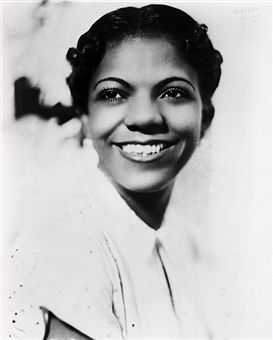
  4. Cleo Brown (1909-1995)

    This is pretty much what all the images of Cleo looked like. When I saw this one, I had to include it, so Cleo gets 2 pix.

    I stumbled upon Cleo, who was also a piano player, working up a Fats Waller song in 2021. I wrote her up as an addendum to my "My Fats Waller Project" post. I'm going to copy that here. She got religion, became a nurse, & retired from music in the 1950s but went back to it later.
    An early Music In note, when I was looking for the video for "you got me under your thumb", I came across the Cleo Brown version - it had a very tasty intro. Cleo was known as the "female Fats Waller". She was 3 (OR 5) years younger, born 1907 (or 1909) vs 1904 for Fats. Her skimpy Wikipedia article says in 1935 she took over for Fats as pianist for the WABC orchestra in NYC.

    It seems like most of her stuff is on this 27-track album, "Here Comes Cleo". Only $9.49 Amazon download, quel bargain! I've really enjoyed it. Favs: "you got me under your thumb", "my gal mezzanine", "when hollywood goes black and tan", "who's that knockin' at my heart?".

    I found her the last week of African-American History Month & thought, "How appropriate & fortuitous!". Touted on Twitter, crickets :-(

    Oooh, just found another album of hers, "1935-1951", 27 tracks, 18 in common w "Here Comes Cleo", only $3.99!!! Snappin' that up right now! 9 new tracks for $3.99 a great bargain!

    [Note, the bolded text above used to be links to MP3 album downloads on Amazon, but, they are broken. I tried to restore them, I couldn't break through Amazon's attempts to sign me up for their unlimited music service. Can you say, enshittification?]

    I've worked up 2 more of her songs I mentioned as favs:"my gal mezzanine" and "who's that knockin' at my heart?".

    Here's her DAHR page, 19 tracks.

  5. Maxine Sullivan (1911-1987)

    I stumbled on Maxine working up "keepin' out of mischief now", done by Fats Waller and many others. I found a 24 track compilation of her music titled "Supposin'", reviewed here. It doesn't appear in her Wikipedia discography. One of her 1st hits was "Loch Lomond", ("you take the high road, & I'll take the low road") so, sadly, she kind of gravitated to schmalzy stuff. :-(

    She had a period where she did a lot of Andy Razaf and Fats Waller songs, several of which are in this compilation. There are plenty more tracks of her music out there, but, having started with this compilation, I would probably wind up with dups, annoying. Plus the schmaltzy stuff. Still, I got that goin' for me.

    She has a great voice, I think maybe 2nd only to Ella. Per Wikipedia, she was performing up until just before her death at age 75.

    She showed up in the 2nd Fats Waller biography I read, in a random anecdote where Fats showed up & insisted on accompanying her at 1 of her gigs.

    We also overlap on "ain't misbehavin'" and "honeysuckle rose", from her Andy & Fats period. She has some weird non-canon lyrics.

    Here's her DAHR record.

  6. Una Mae Carlisle (1915-1956)

    Una Mae was a force of nature. Plus a protégé of Fats Waller on piano. Plus a songwriter.

    In late 1932, Fats Waller moved his family to Cincinnati, so he could perform on clear channel radio station WLW, which pretty much reached coast to cost. For his 1932 christmas show, he recruited 17 YO singer/pianist Una Mae Carlisle, from nearby Xenia OH, who had won a talent contest. She became a regular on the show through 1933.

    She almost stole my review of the 1st Fats Waller biography I read. She was definitely an alpha type personality. So it's totally appropriate that her Wikipedia article identifies her as:

    • "the first black woman to have a composition appear on a Billboard chart" ["walkin' by the river"]
    • "first black American to host a national radio show".

    I mean, who knew? I 1st encountered her in the DAHR database page for Fats Waller & His Rhythm, as a vocalist with Fats on the song, "i can't give you anything but love", recorded 1939-11-03. [That database page also lists a 1937-10-07 recording of "call me 'darling'" with singer Dorothea Driver, to whom I can find no other references.] Una had recorded 6 tracks in London & 2 tracks in Paris before that collaboration with Fats. She is on record as to how that boosted her career in the US.

    Here's her DAHR page - 33 tracks. Hmmm, nothing before ICGYABL with Fats. Ah, Here's a more complete track list than DAHR.

    I 1st found 5 of the London tracks on Amazon, reviewed here, "Music In, 2024, Batch 3". Then I found an 8 song album from 1941 on Apple. Then I hit paydirt, 3 "In Chronology" CDs, 70 tracks total, I think her whole catalog, reviewed here, "Music In, 2024, Batch 4". She died young, age 40.

    I've recorded "t'ain't yours" - I love this video!

    I am working up "you made me love you" (with a tasty intro) and "don't try your jive on me". Interesting, she recorded a pretty fast version of DTYJOM at her 1st session, in London 1938-05-20. 3 months later, on 1938-08-21, also in London, Fats recorded the same song, but at a slower tempo, and on organ. I'm working up Una Mae's version!

    Our 1st artist, Ethel Waters, I have heard of my whole life. The next 5 were all new to me. These last 4 are all well-known performers.

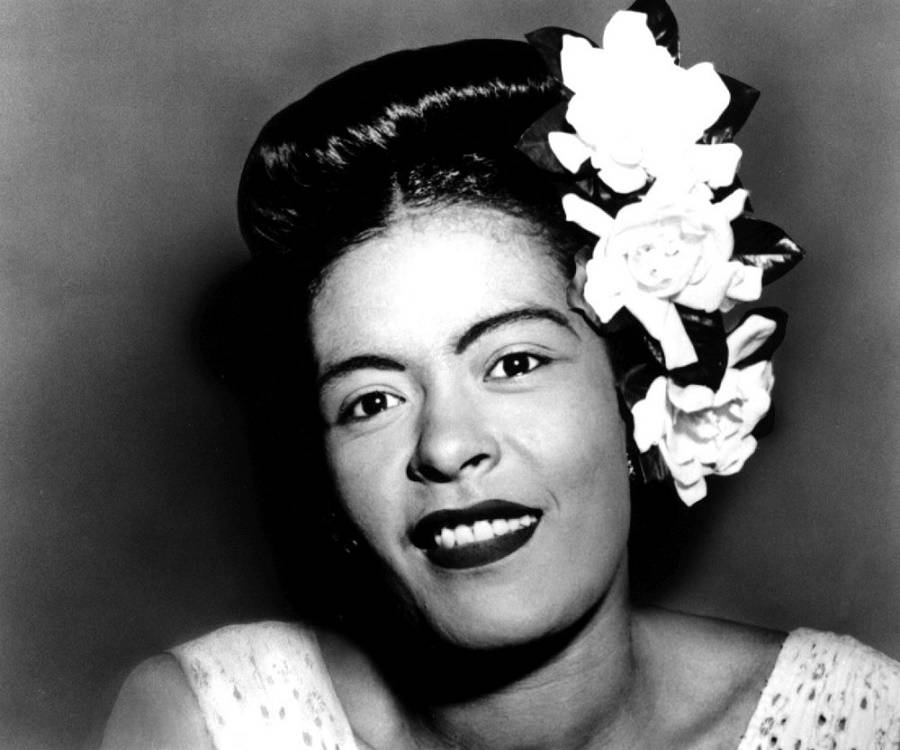
  7. Billie Holiday (1915-59).

    Famously nicknamed Lady Day, she was a songwriter as well as a vocalist. She is a well-known cultural icon; she has been the subject of several movies.

    She is not 1 of my favorites of this group. I had the bad luck to have the 1st (and only) album of hers I bought be her last one, "Lady in Satin", released in the year before her death. Her voice had gotten thin and reedy.

    The Jaz Dumoz songbook overlaps with her on "i cover the waterfront", "them there eyes", "you go to my head", "god bless the child", and "spreadin' rhythm around", which Fats Waller also did. She co-wrote "god bless the child".

    Here's her DAHR page, 198 tracks.

  8. Ella Fitzgerald (1917-1996)

    Ella is my favorite vocalist, female or male, of all time. At her peak, the timbre and tone of her voice were just perfect IMO.

    She had a troubled childhood and adolescence, with some trouble with the law. Music was her salvation. I remember a story from somewhere, where Chick Webb had been told to find a new singer for one of the big NYC clubs. He came back with Ella & was told, no good, she's not pretty enough. He threatened to quit if she were not the singer, and won out. Ella later took over his band after his death.

    Ella was incredibly prolific, several dozen albums. I have 9 of her albums - 3 with Louis Armstrong, with Duke Ellington, with Count Basie, with Joe Pass, the Johnny Mercer songbook. She is tagged to 16 songs in the Jaz Dumoz songbook, but, like Frank Sinatra, I only tagged her to a song if it was strongly associated with her - or - if she did an intro. Ella liked intros, if a song had 1 she probably did it.

    Here's one: "i got rhythm", with a totally odd intro. Here's another, with a more standard Cole Porter intro: "it's de-lovely".

    3 more songs: "in a sentimental mood"; "i'm beginning to see the light"; and one of her great duets with Louis Armstrong: "they can't take that away from me".

    Here is her DAHR page, 349 entries, wow!

  9. Sarah Vaughan (1924-1990)

    Sarah was a pianist as well as a vocalist. She started her career with Earl Hines big band, which featured Billy Eckstine as vocalist. She has such a beautiful voice.

    I have 2 of her albums, 1 with virtuoso guitarist Barney Kessel and a bass player, "Sarah + 2".

    I was exposed to her via her version of "when sunny gets blue". I did an arrangement, but my guitar teacher Ricky Howard's arrangment was much better. That is 1 of my fav songs. I also do her version of "sophisticated lady", which I like because she starts the song with the bridge & the last verse, which puts the song title in the 7th line rather than the 14th.

    Wow, her DAHR page has only 2 songs???

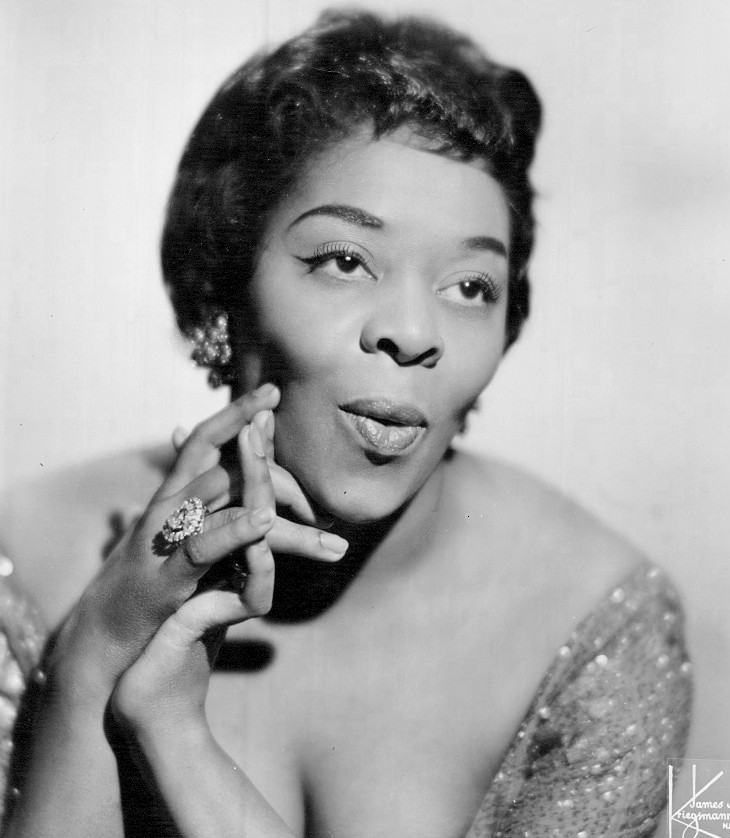
  10. Dinah Washington (1924-1963)

    I like her voice - it's kind of 1/2-way between Ella or Sarah and Billie.

    She started her career in Chicago - "By 1941–42, she was performing in such Chicago clubs as Dave's Café and the Downbeat Room of the Sherman Hotel (with Fats Waller).". Wow, she was married 6-9 times! She did a few songs with very suggestive lyrics.

    I 1st intersected with her on her last hit, "september in the rain", 1961. This song was the 2nd of my COVID #SongOfTheDay songs, currently at 229 songs. Her 1st pop hit in 1959, was "what a diff'rence a day made" - originally a 1934 spanish-language song by a female Mexican songwriter.

    Her DAHR page has only 1 song???

That completes the list!

4 out of 10 died young, in their early 40's. Billie had drug problems, Dinah accidentally OD'ed on prescription drugs. Ivie and Una Mae had bad luck.


When I started this post, I had the idea of linking the songs to both these great artists and the Jaz Dumoz recording. I decided against that - giving the ladies their due is much more appropriate!

But, the Marketing Director (me) for Jaz Dumoz insisted on some tie-in.

So, here is a YouTube playlist of Jaz Dumoz performing most of the songs listed above - 30 great songs! I'm sure I don't do them justice, but I try to perform them with respect and affection.

10 African-American Female Early Jazz Musicians